
Section 1
Start with water
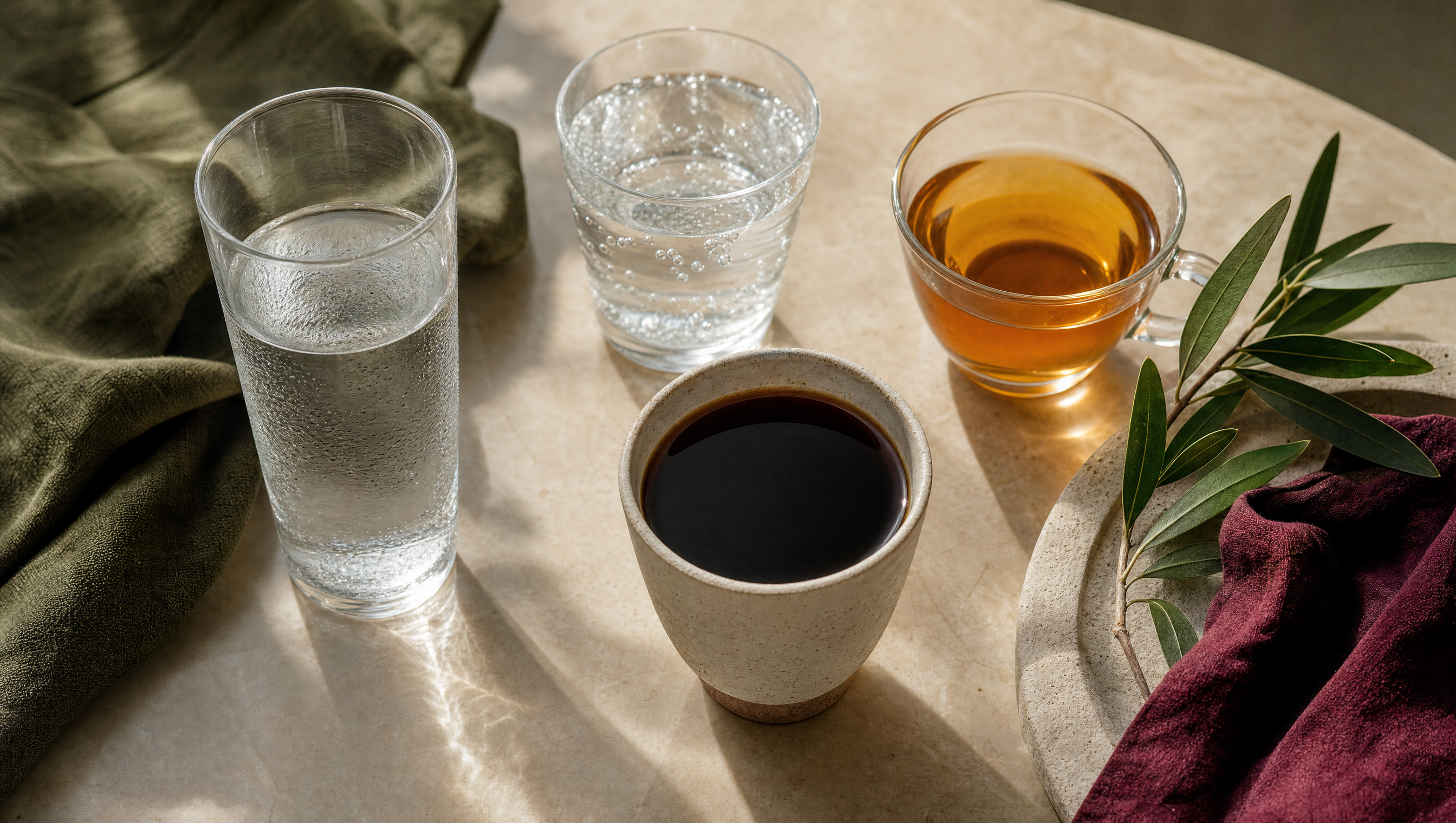
Plain still or sparkling water is the clearest default during a fasting window. Choose the temperature and carbonation that feel comfortable, sip according to thirst, and remember that heat, exercise, illness, pregnancy, medication, and health conditions can change fluid needs.
Use this as a prompt for observation rather than a strict rule. Your schedule, health, appetite, culture, and preferences all matter when deciding what is appropriate.
Section 2
Coffee and tea are optional
Unsweetened black coffee and plain tea fit many zero-calorie fasting definitions, but they are not required. Reduce or skip them if they worsen reflux, nausea, anxiety, sleep, or a racing heartbeat. Caffeine should never be used to push through unusual weakness or feeling unwell.
Use this as a prompt for observation rather than a strict rule. Your schedule, health, appetite, culture, and preferences all matter when deciding what is appropriate.
Section 3
Define what counts before you begin
Milk, cream, sugar, honey, juice, and most sweetened drinks contain energy and end a strict no-calorie fast. Non-caloric sweeteners are more personal: they may fit your definition, but taste, appetite, digestion, and habit can still matter. Pick a rule you understand instead of moving the goalposts mid-fast.
Use this as a prompt for observation rather than a strict rule. Your schedule, health, appetite, culture, and preferences all matter when deciding what is appropriate.
Section 4
Electrolytes need context
An ordinary overnight fast usually does not require a special electrolyte product. Heavy sweating, prolonged exercise, illness, medications, and kidney, heart, or blood-pressure conditions change the decision. Avoid improvised high-dose salt or potassium routines without qualified guidance.
Use this as a prompt for observation rather than a strict rule. Your schedule, health, appetite, culture, and preferences all matter when deciding what is appropriate.